For Healthcare Providers
Earlier disease detection is possible at scale
Non-invasive screening for ocular and systemic diseases embedded in routine care
Join the Network
Most disease is diagnosed too late
Chronic disease develops over years, long before symptoms appear. By the time a patient presents with a complaint, the window for the simplest or most effective clinical intervention may have narrowed. The cost of late diagnosis falls on the patient, the provider, and the healthcare system alike.
Connected care, across every provider
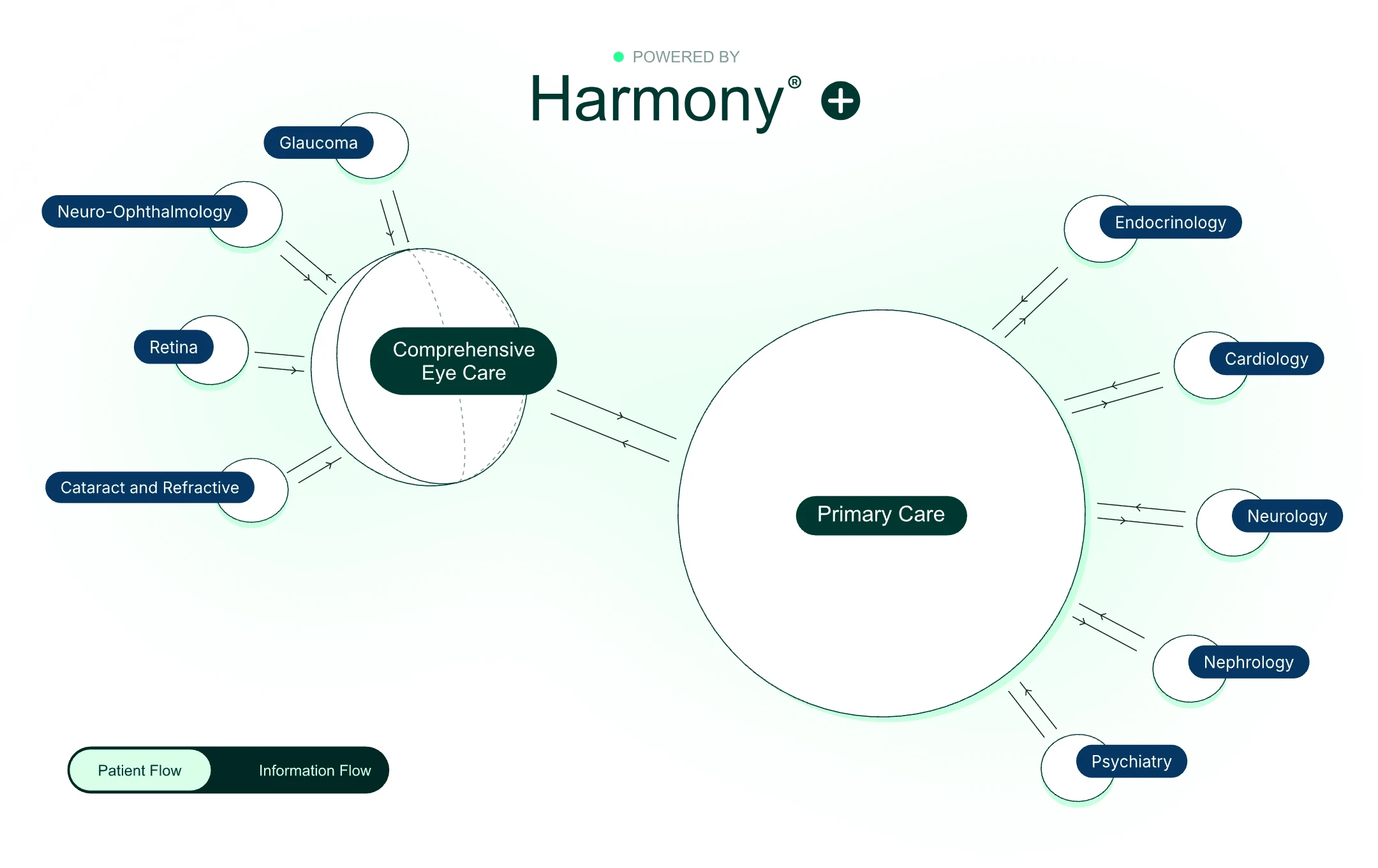
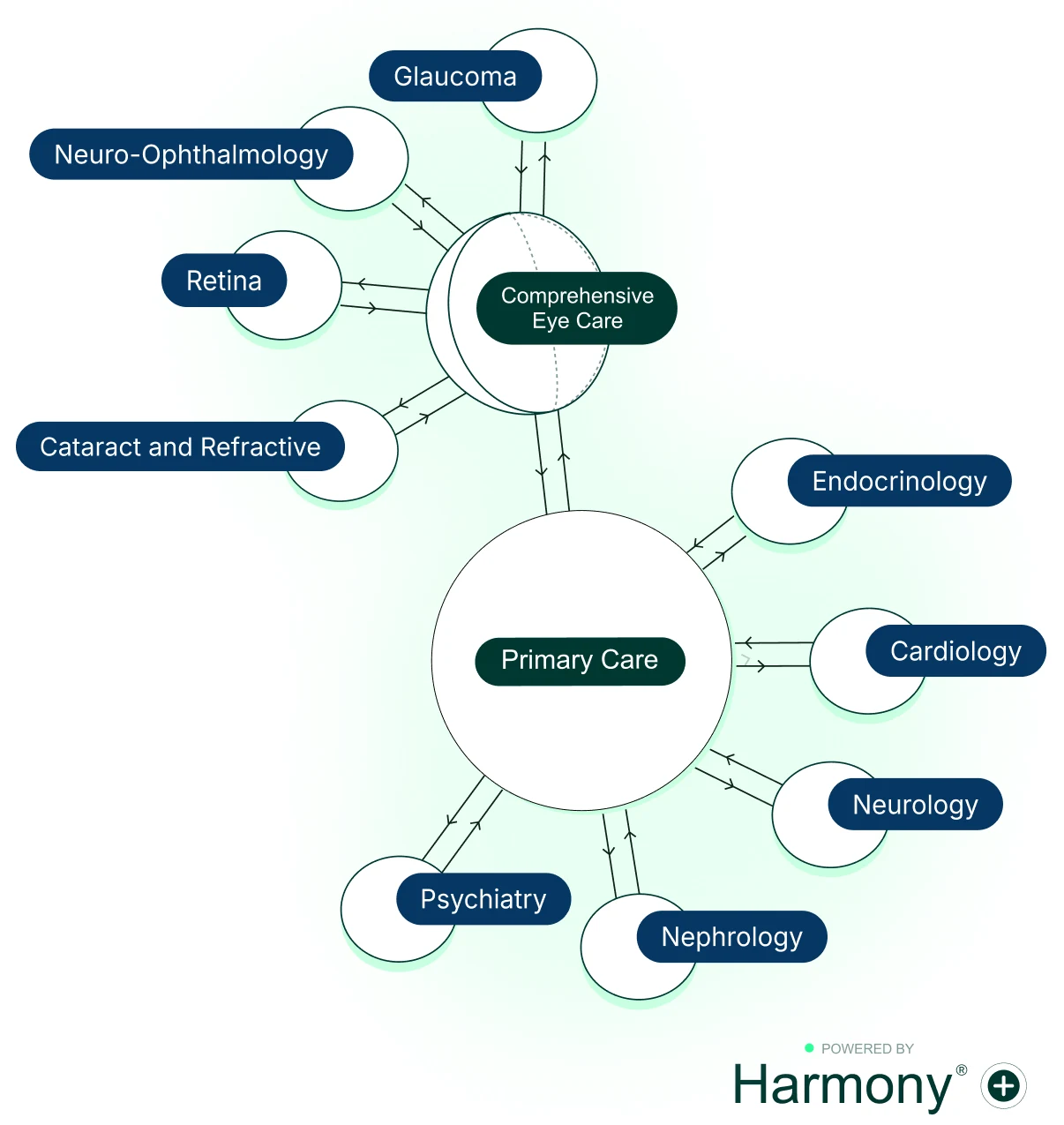
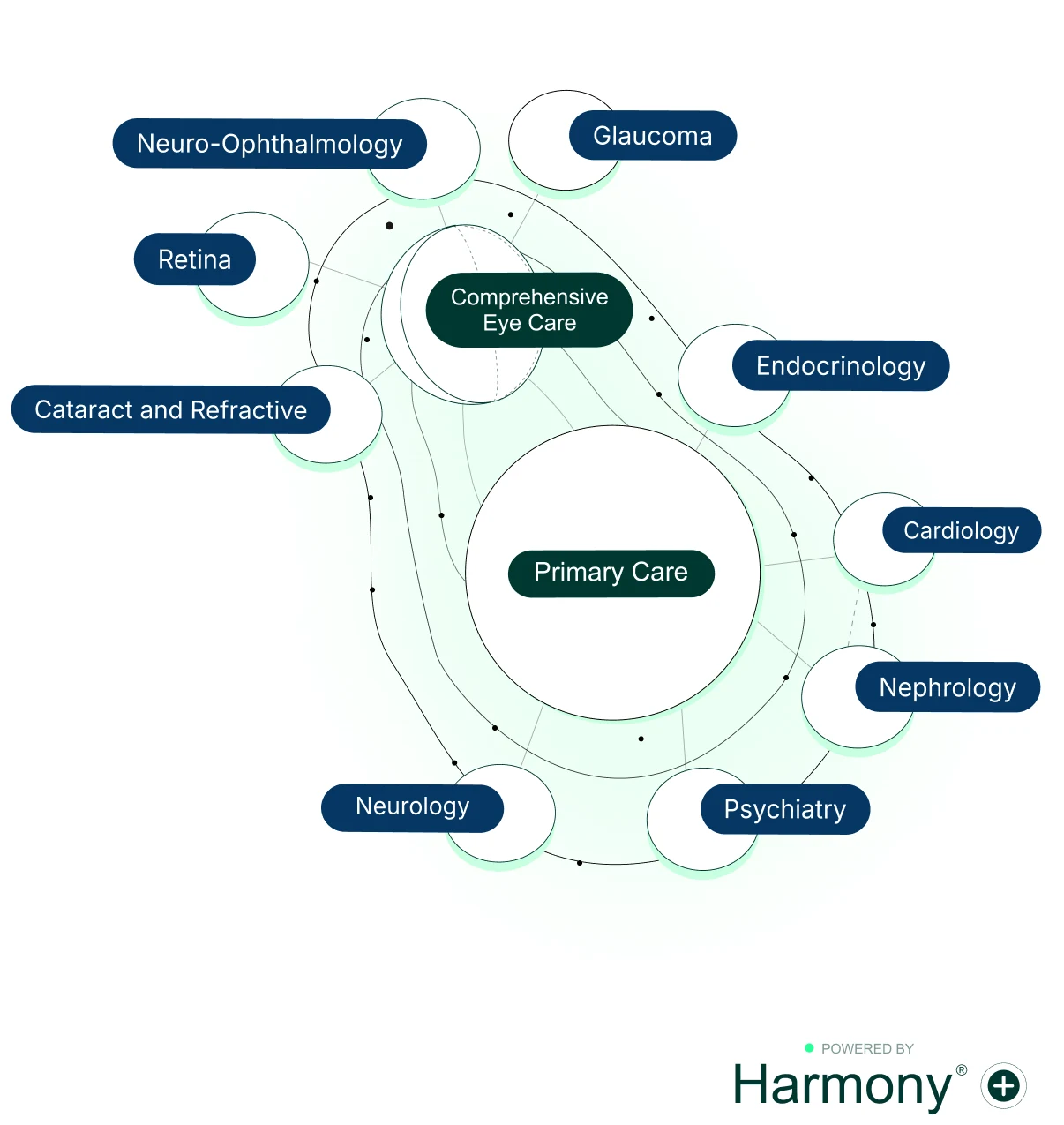
In the current model, patients move back and forth from primary care to specialty care and back, and their information does not follow. In the connected network, patients are referred through optimized workflow and Harmony provides a single source of truth for all the patient’s doctors.
( 02 )
Eyecare Applications
AI and clinical decision support built into the eye care workflow, spanning screening, monitoring, glaucoma assessment, OCT review, and remote refraction. Sharper clinical signals, more consistent assessment, and greater confidence in referral and treatment decisions.
Learn more
( 03 )
Systemic Health Applications
AI analysis of a routine retinal image surfaces risk signals for systemic conditions, from cardiovascular and kidney disease to biological aging. The same exam now supports earlier, preventive action.
Learn more
( 04 )
Diabetic Retinopathy Screening in Primary Care
Retinal screening for diabetic eye disease brought into primary care, with connected referral to eye care when disease is found. Higher screening rates, earlier detection, and closed care gaps without new added visits.
Learn more
Where early and precise disease detection matters most
Ocular and systemic diseases have measurable biological signals in the eye long before symptoms appear. Oku identifies those signals across the chronic conditions that carry the greatest clinical burden. The peer-reviewed evidence behind this work is available in our research library.
View our Research
Cardiovascular
Every 34 seconds
Someone in the US dies of cardiovascular disease.1 At least half of sudden cardiac deaths strike with no prior symptoms.2
Diabetes and Retinopathy
90%
of diabetes-related vision loss is preventable with early detection.3 Most of it is not caught early enough.
Age-related macular degeneration
973,000
Americans are estimated to have geographic atrophy, the advanced stage of atrophic disease.4,5 Fewer than 1 in 5 people with AMD know they have it.6
Exudative AMD represents only about 10-15% of all AMD cases,7 yet accounts for approximately 90% of AMD-related legal blindness.8
Glaucoma
4.2M
Americans have glaucoma, and about half remain undiagnosed.9,10
How it works
Eye care and primary care, connected. Faster referrals, a smoother path from screening to treatment.
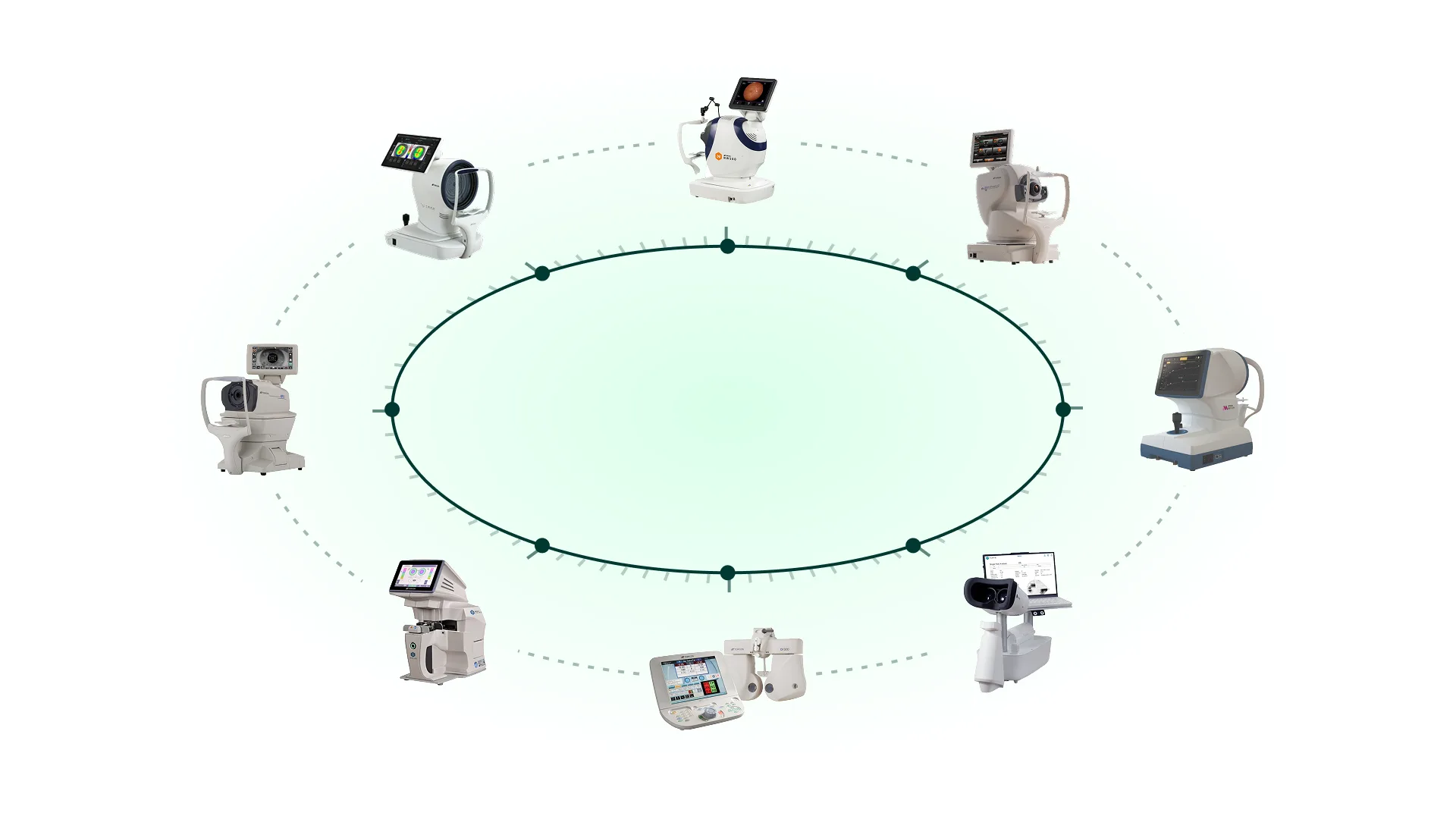
The moment a patient checks in, Harmony brings clinical imaging and history, patient data, and device inputs into one connected view. New images join the same record, giving the care team a clearer picture of what has changed without hunting across disconnected systems.
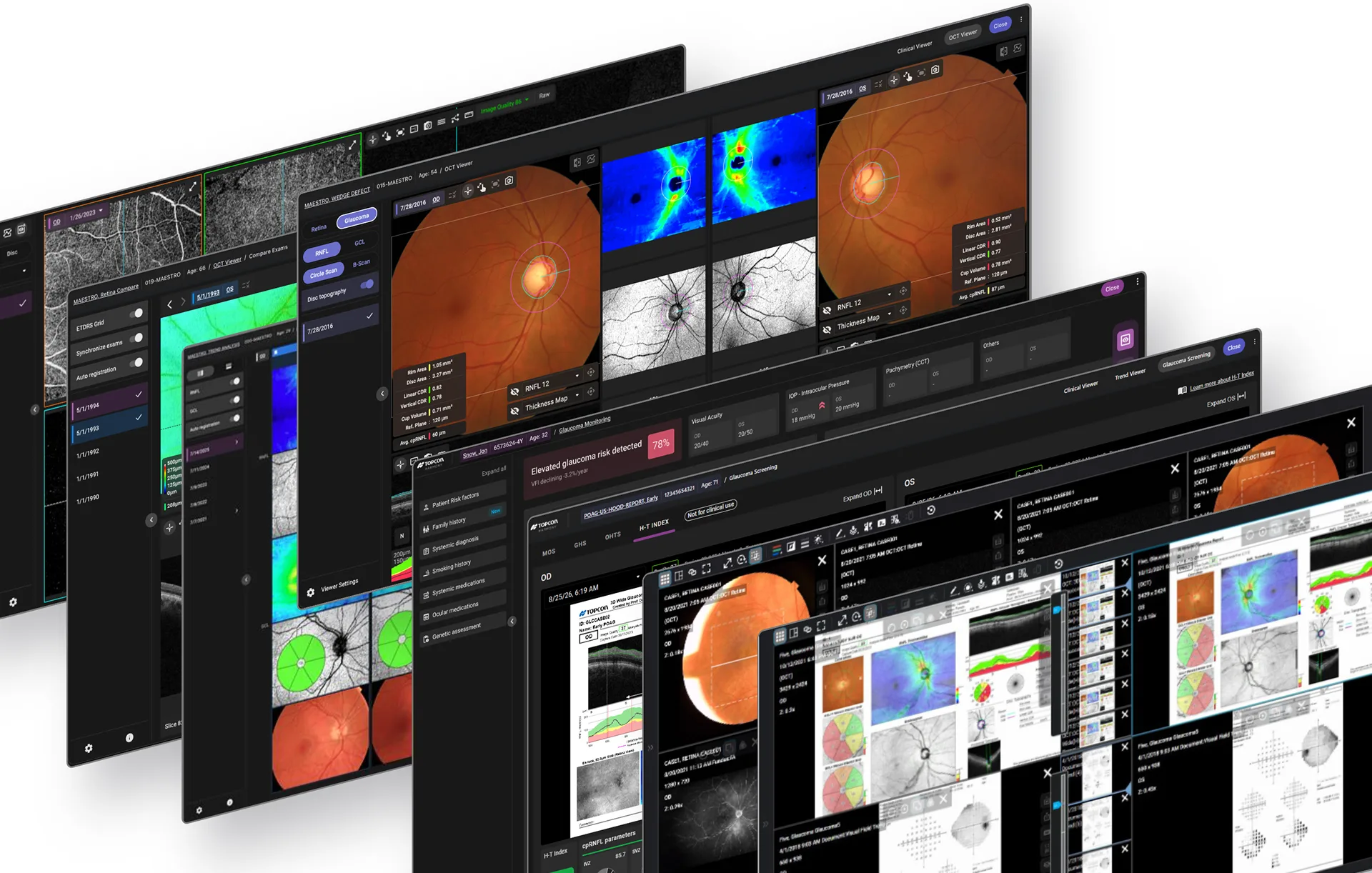
One scan, many signals
Clinical data and images flow into Harmony, where AI-enabled clinical decision support is organized around the conditions eye care clinicians manage every day: diabetic retinopathy, age-related macular degeneration, glaucoma. The same eye scan carries early signals of cardiovascular, metabolic, and neurological health, and the platform is built to analyze more of them over time.
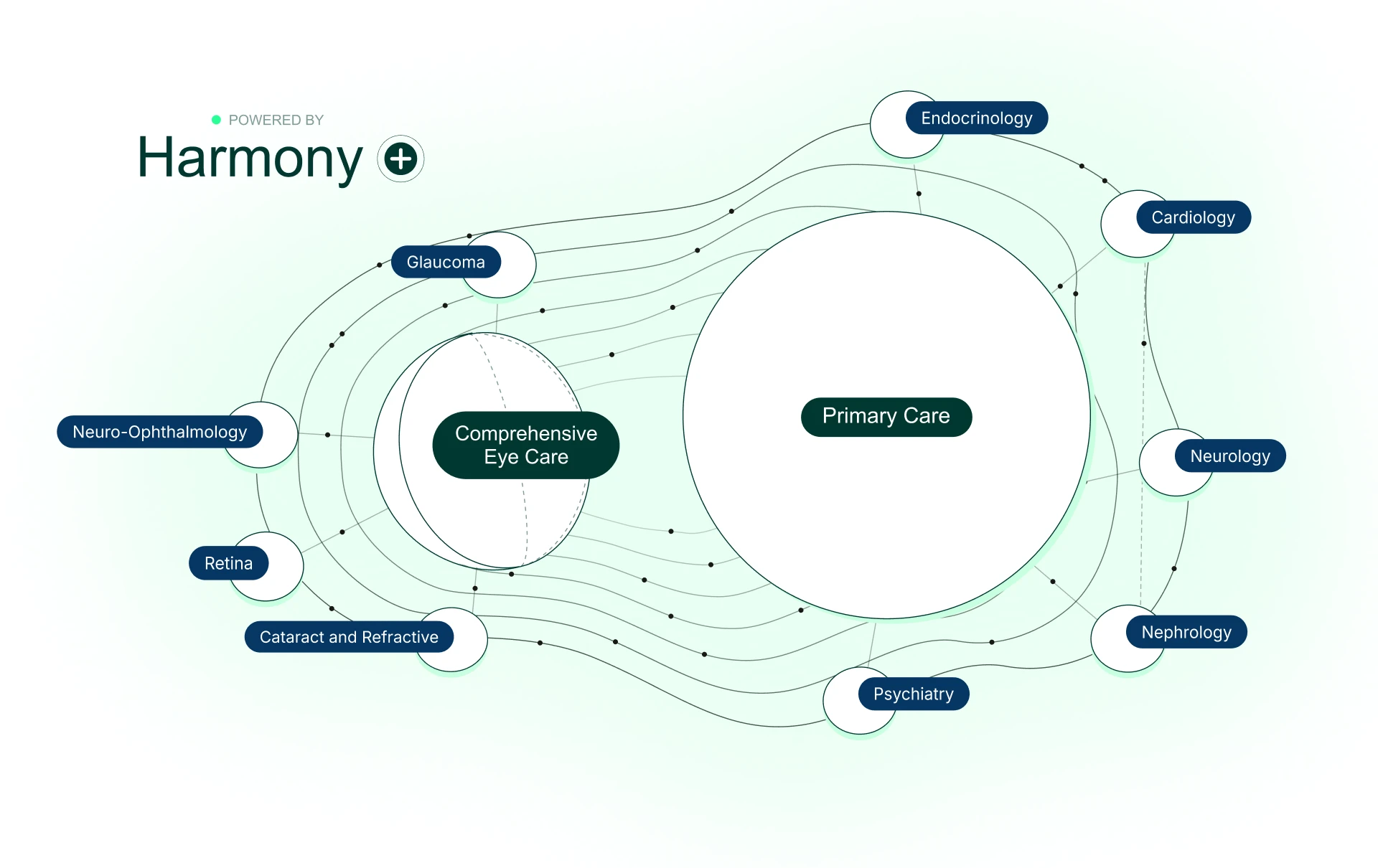
Every outcome keeps care moving
After the healthcare provider recommends the clinical management, structured results return to the patient record. The patient is monitored or referred across the care network. Each visit builds a connected, longitudinal view of the clinical history, and that view compounds: as new AI-enabled solutions come online, the same exam and the same workflow reveal more about whole-body health.
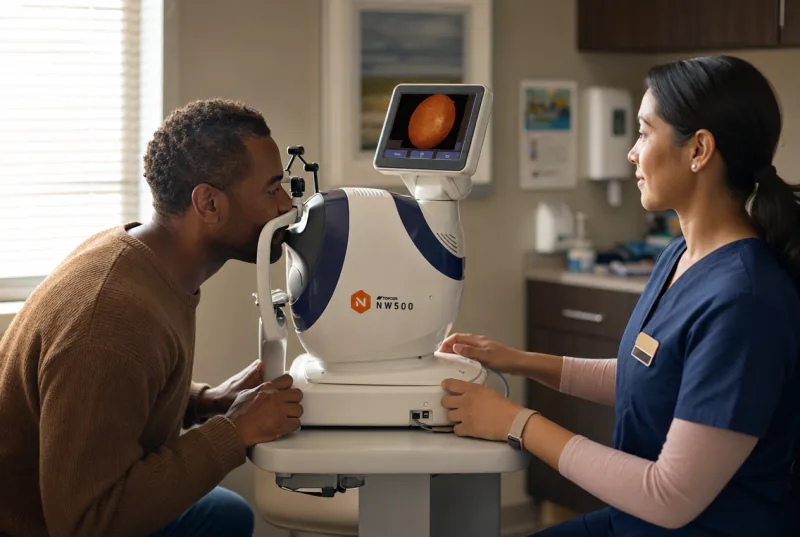
AI-generated image. Not an actual patient or clinician.
Screen more patients where they are
Retinal images are captured during a routine primary care visit using a compatible tabletop or handheld camera and uploaded to Harmony. Screening fits into a visit happening now, giving more patients access to recommended diabetic eye screening without requiring a separate eye care appointment.
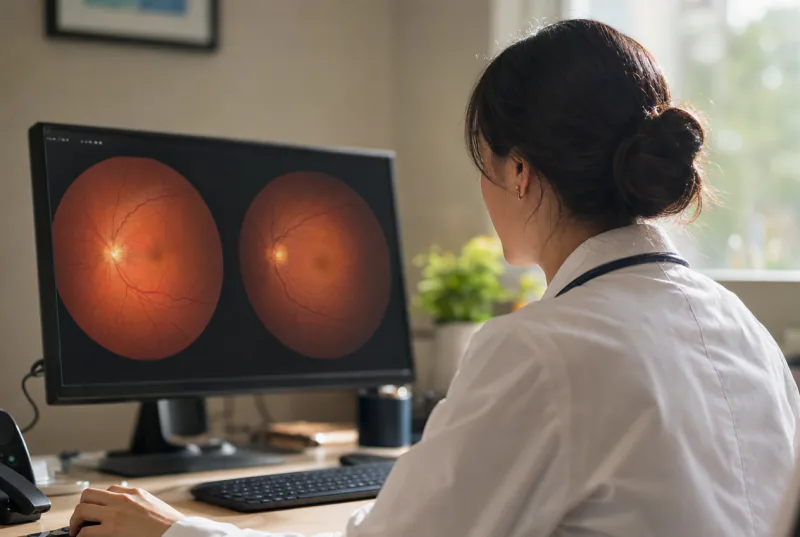
AI-generated image. Not an actual patient or clinician.
Retinal images become actionable results
Harmony enhances the uploaded images and routes them for interpretation: an AI-enabled solution screens for diabetic retinopathy, or board-certified eye care physicians review the original and enhanced images and note any other suspected vision-threatening disease. Results are returned to the practice EMR.
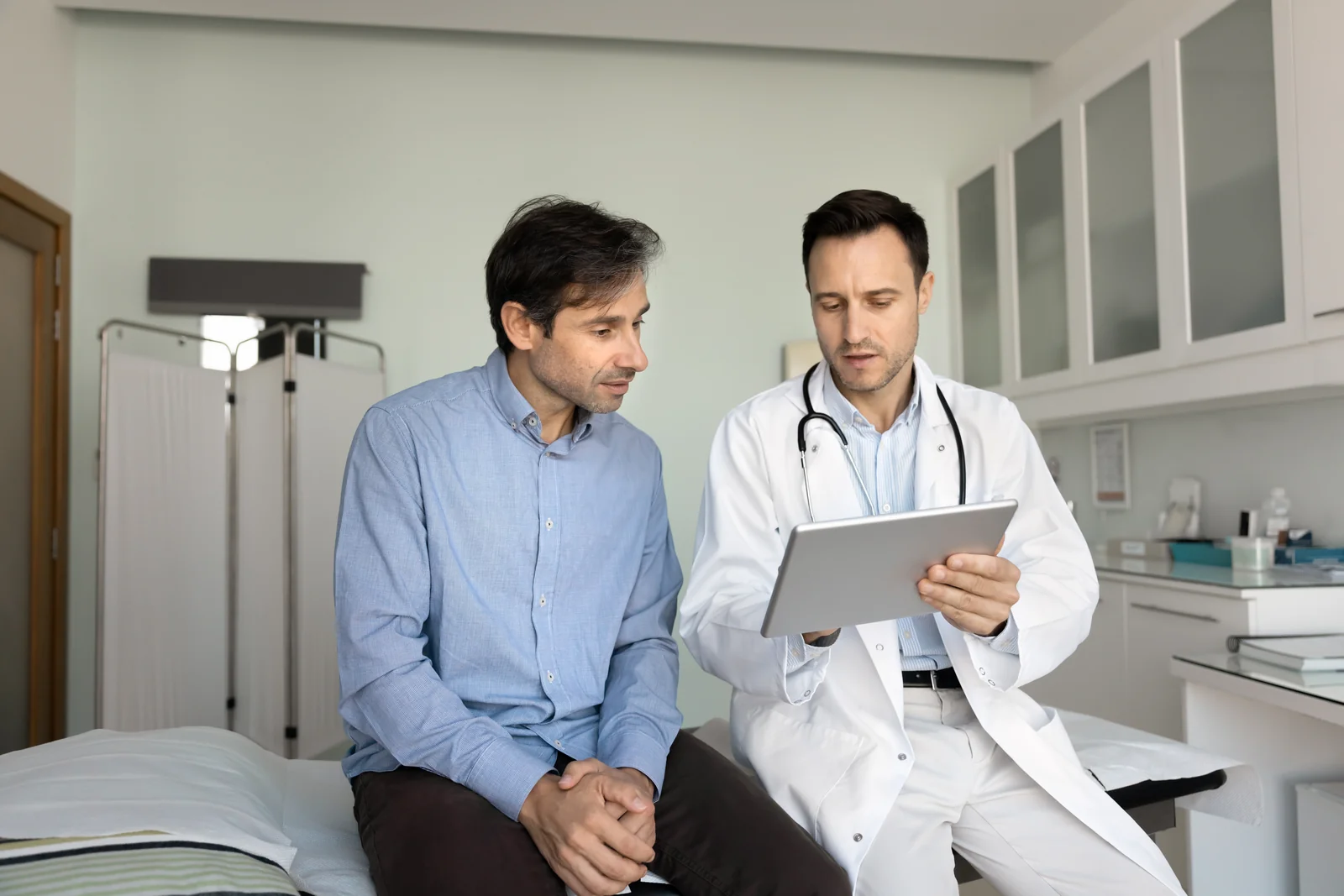
Close the gap from screening to care
The completed report returns to the provider's workflow, supporting a clear conversation with the patient and appropriate follow-up. Patients who need further eye care are referred to local eye care professionals in the region, while completed screening helps the practice document care-gap closure and quality performance.
A network at scale
Oku operates across 8,000+ primary eye care and 2,000+ primary care locations in the United States.1
Joining the Oku network connects your practice to an active, growing dataset and a care infrastructure that is working now.

Turn undetected risk into proactive care
See what your patient population is missing, and what it costs to miss it